Sep. 23, 2026
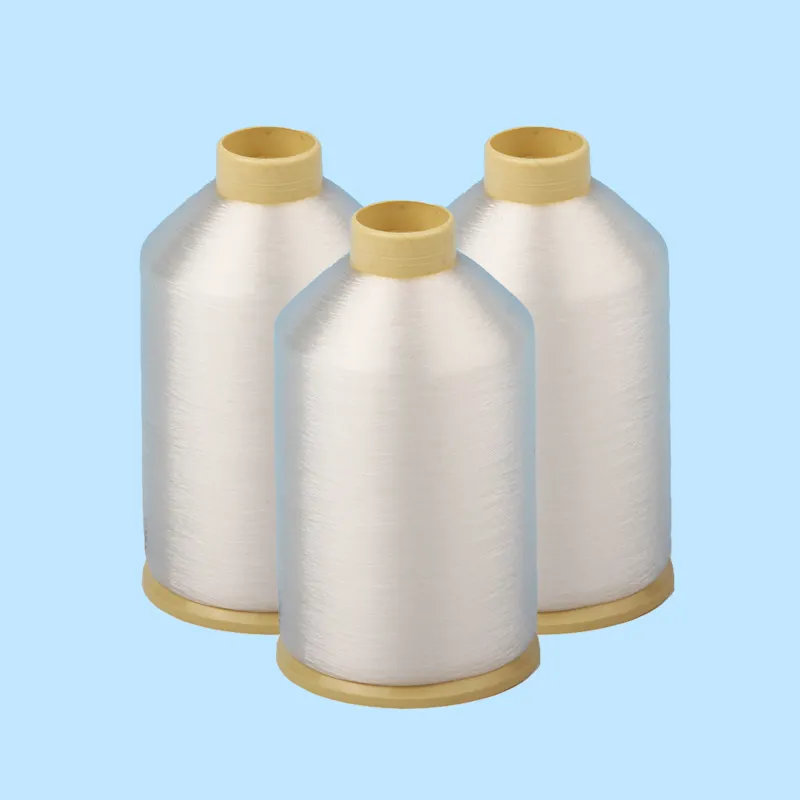
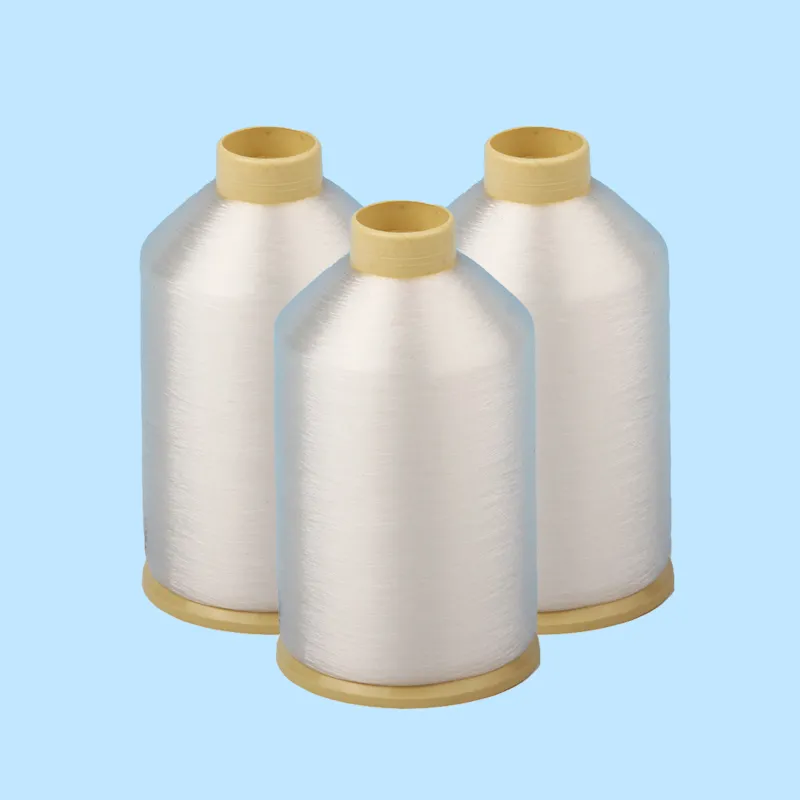
BOSIDI supplies PP monofilament yarn as a low-density, chemically stable single filament that earns its place wherever a buyer needs strength at low weight and resistance to water and most acids, and the four jobs where it beats nylon and polyester on cost and performance are filter cloth, woven bags, geotextile, and rope. Polypropylene monofilament floats, shrugs off moisture, and runs cheaper than the engineering polymers, so the question is rarely whether it is capable but whether the application can live with its two weak points: low heat resistance and UV sensitivity without stabilizer. Read the duty against those limits and PP mono yarn is one of the most cost-effective filaments a buyer can specify.
Polypropylene has a density near 0.91 grams per cubic centimeter, which is lighter than water and far lighter than nylon or polyester, so a PP filament gives more length per kilogram and helps a rope or a geotextile weigh less for the same coverage. Its tenacity sits around 5.0 to 6.5 cN/dtex with elongation of 15 to 25 percent, which is enough for structural weaving without the stiffness that cracks a bent part, and its hydrophobic surface means it does not soak up water or grow microbes in a wet environment. The trade-offs are a melt point near 160 to 170 degrees Celsius and a tendency to chalk under long sun exposure, so PP mono yarn needs a UV stabilizer for outdoor use and a lower oven temperature during coating than polyester would tolerate. BOSIDI lists these properties on the PP monofilament product page so a buyer can check the grade before committing a tooling run.
Filter cloth is where PP monofilament shines because the filament does not absorb the liquid it screens, so a PP weave stays open and resists clogging in water, juice, and many chemical streams. The smooth round cross-section sheds solids better than a textured yarn, and the chemical resistance lets the cloth sit in acid or alkali that would attack nylon, which is why PP mono is common in plate-and-frame presses, mining dewatering, and food-grade separation where the medium must rinse clean. The diameter decides the pore size, so a filter buyer should spec the millimeter value tightly and check the CV percent so the aperture holds across the whole roll. BOSIDI draws PP filament from 0.13 mm and 0.15 mm for this use and the industrial application page covers the separation duties the yarn serves.
Woven sacks and flexible intermediate bulk containers rely on PP monofilament because the yarn is strong, light, and cheap enough to weave in volume, and a PP tape or mono weave carries cement, grain, and resin without absorbing moisture that would rot the seam. The same filament goes into narrow fabrics such as webbing, strapping, and edge tape where a flat woven ribbon needs consistent tenacity and low stretch, and the boilingshrinkage of 2 to 6 percent keeps the weave dimensionally stable after finishing. A buyer moving from cotton or jute to PP saves weight and rejects, but should confirm the UV grade if the bag sits in a yard, and BOSIDI supplies stabilized PP for outdoor sacking through the products center. The PET monofilament range is the upgrade path when a bag needs higher heat or abrasion than PP allows.
Geotextile is a steady home for PP monofilament because the filament is buried, not burned or sunlit, so its two weak points disappear and its low cost and chemical stability take over. PP mono yarn is woven or needlepunched into separation layers, drainage mats, and erosion-control fabrics that hold soil, let water pass, and resist the acids in ground water better than natural fibers, and the light density lowers the weight of a roll a crew has to lay. The buyer should match the denier to the load the fabric carries and the elongation to the ground movement it must absorb, because a too-rigid weave cracks along a settling edge. BOSIDI grades PP for these duties alongside the PE monofilament line, which is the alternative when a project needs even higher chemical idle resistance in a wet trench.
Rope and net are the oldest PP monofilament jobs because the filament floats and will not rot in salt water, so a PP mono rope stays light on a boat and a PP net keeps its mesh in a fish pen without soaking up weight. The hydrophobic surface means the rope does not gain mass when wet the way a natural fiber would, and the chemical resistance shrugs off diesel and bilge, which is why PP mono is standard for mooring lines, aquaculture cages, and agricultural shade net. The limit is heat and sun, so a rope that runs through a winch or sits on a deck for years needs a UV masterbatch and a clear working-temperature note, and BOSIDI flags both on the PP product page. Where a rope needs higher tenacity than PP gives, the nylon PA6 monofilament is the step-up grade.
PP mono yarn loses on heat and hard UV, so it is the wrong base when a part is baked, ironed, or left in direct sun for years without stabilizer, and a buyer should switch grade before forcing it. Hot-air drying above its melt window, a textile that must be dyed at high temperature, or a safety strap that sees sustained load in sunlight are all reasons to move to PET monofilament for heat or nylon PA6 for toughness and recovery. BOSIDI keeps all three materials so the buyer can step up the polymer instead of over-engineering the PP, and the products center lays the grades side by side for a quick comparison.
BOSIDI draws PP mono yarn in virgin and customized grades, sets the diameter, tenacity, and UV package to the application, and documents the shrinkage and CV so a buyer can plan finishing and weaving. The customization process starts from the end use, the quality system holds the tolerance, and the contact team supplies the CoA and the test standard before a volume order is cut. Telling BOSIDI the job up front, filter or rope or geotextile, is the fastest way to land on the right PP grade instead of a generic off-the-shelf line that may miss the UV or heat limit.
Q: What are the main advantages of PP monofilament yarn over nylon or polyester? A: PP is lighter than water, cheaper, and naturally resistant to moisture and many acids, so it excels in rope, filter cloth, and geotextile where weight and chemical idle resistance matter more than heat tolerance.
Q: Why does PP monofilament need a UV stabilizer for outdoor use? A: Standard polypropylene chalking and loses strength under long sun exposure, so a UV masterbatch is added for ropes, geotextile edges, and sacking that sit outside. Indoor or buried uses usually skip the stabilizer.
Q: Can PP monofilament be used for high-temperature applications? A: Only up to about 160 to 170 degrees Celsius melt point, and coating ovens must run lower than for polyester. For hot-air drying or heat-set finishing, confirm the temperature grade with the supplier before ordering.
Q: Is PP monofilament good for filter cloth? A: Yes. Its hydrophobic smooth surface resists clogging and survives many acid and alkali streams that attack nylon, and the diameter sets the pore size, so it is a common choice for separation media and dewatering presses.
Q: How do I choose between PP and PE monofilament for a woven product? A: Both are light and chemical resistant, but PE edges ahead in certain wet chemical trenches while PP is usually the lower-cost default for rope, bags, and geotextile. Match the grade to the fluid and the sun exposure the product will see.

Follow Us
Follow Us
Navigation
Navigation
Contact Us
Tel.: +86 135 5678 0711
E-mail: bosidi@foxmail.com
Add.: Building 2, No. 9 Weixing Road, Chashan Town, Dongguan, Guangdong, China